/// Share this article
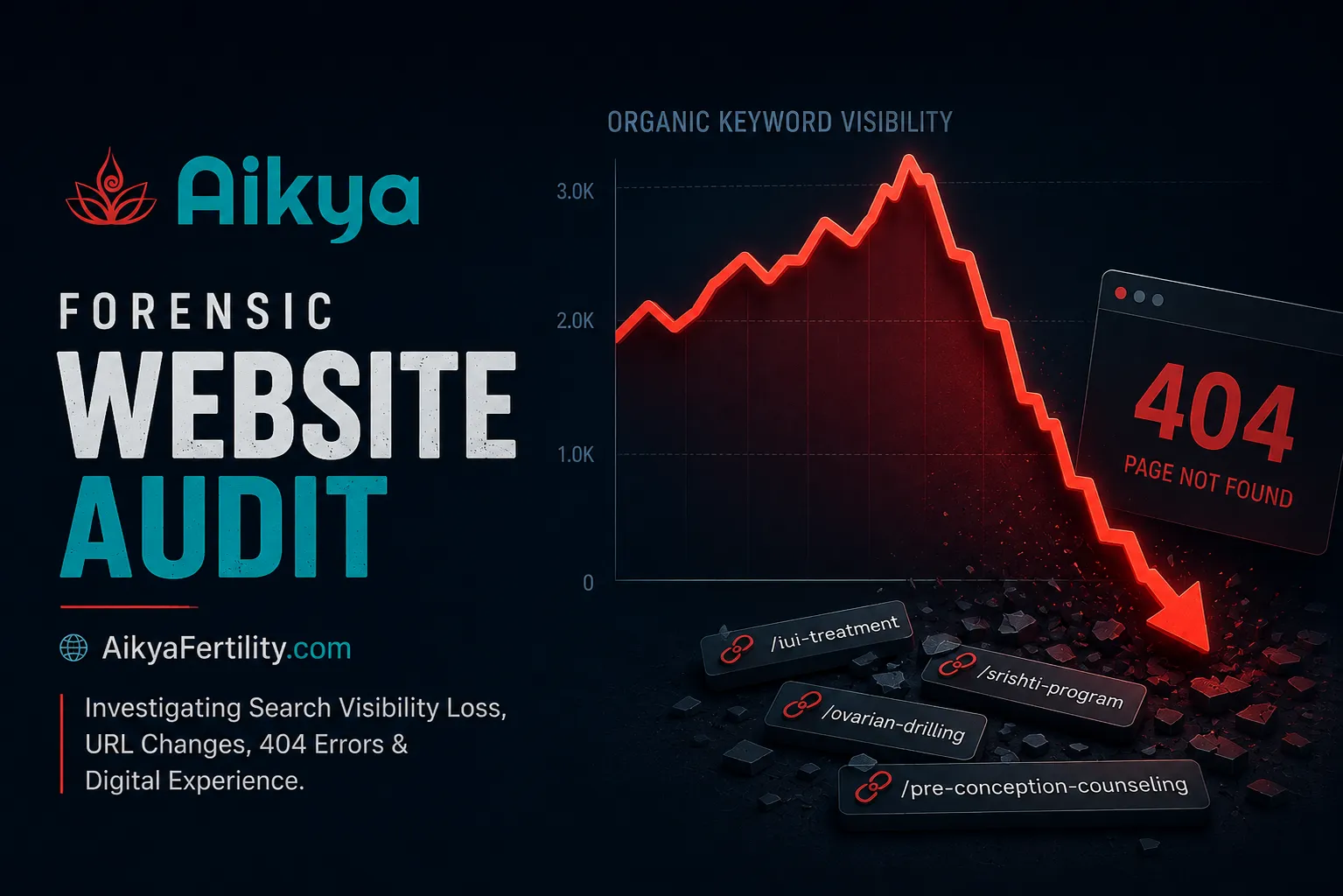
How successive website changes, URL migrations and unresolved technical issues appear to have affected the digital performance of a Bangalore fertility centre
Website investigated: Aikya Fertility & Research Centre
Investigated by: Vikas Solanke | Web Design Bangalore
Industry: Fertility, IVF & Women’s Healthcare
Investigation period: 2019–2026
Current website reviewed: August 2026
Nature of investigation: Historical website, search visibility, URL architecture, technical SEO, internal linking, conversion and UX analysis
Executive Summary
Aikya Fertility & Research Centre’s website presents an unusually interesting digital history.
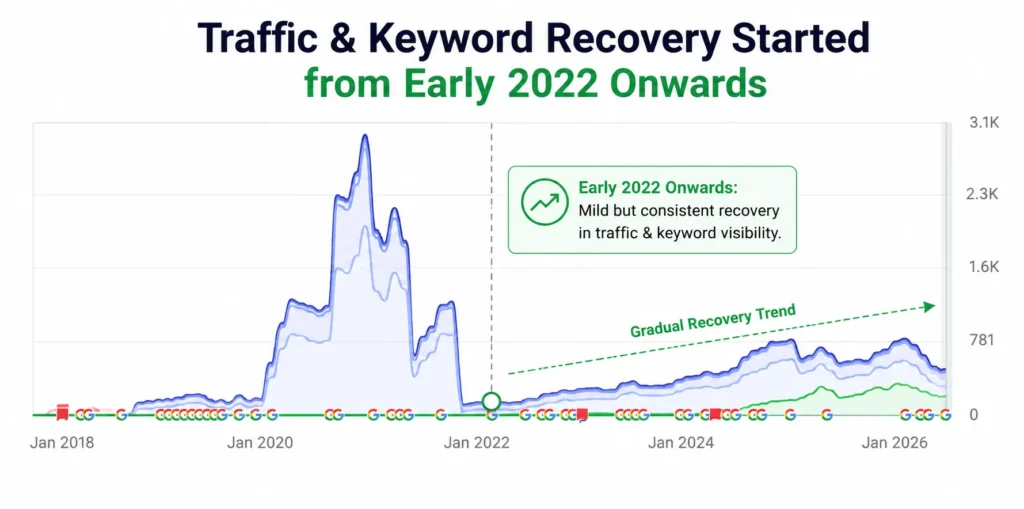
Historical evidence available for the domain shows a website that reached a substantial organic-search visibility peak in 2021, followed by a dramatic collapse around early 2022, a prolonged recovery period, another major website redevelopment around early 2026, and another substantial decline in search visibility during the same broader period.
The most significant historical observation is this:
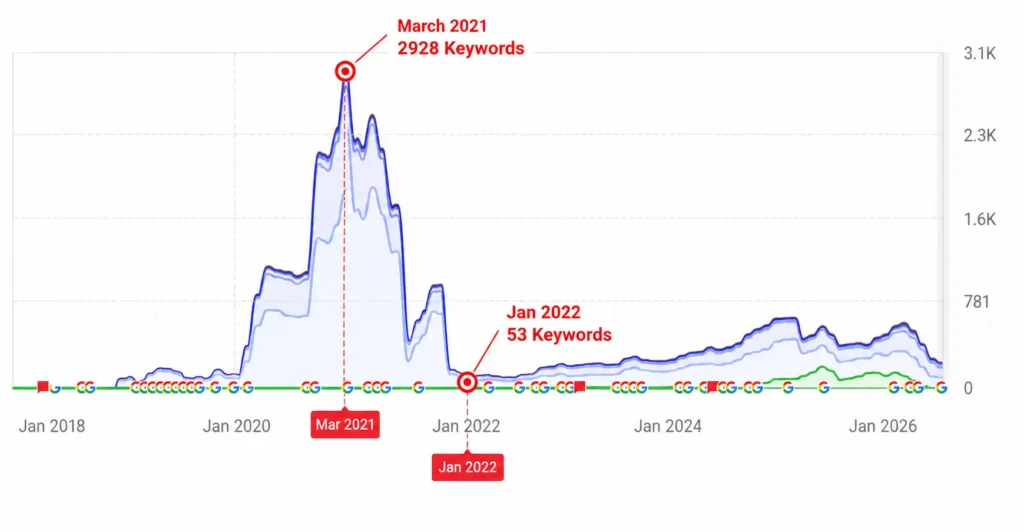
2,928 → 53
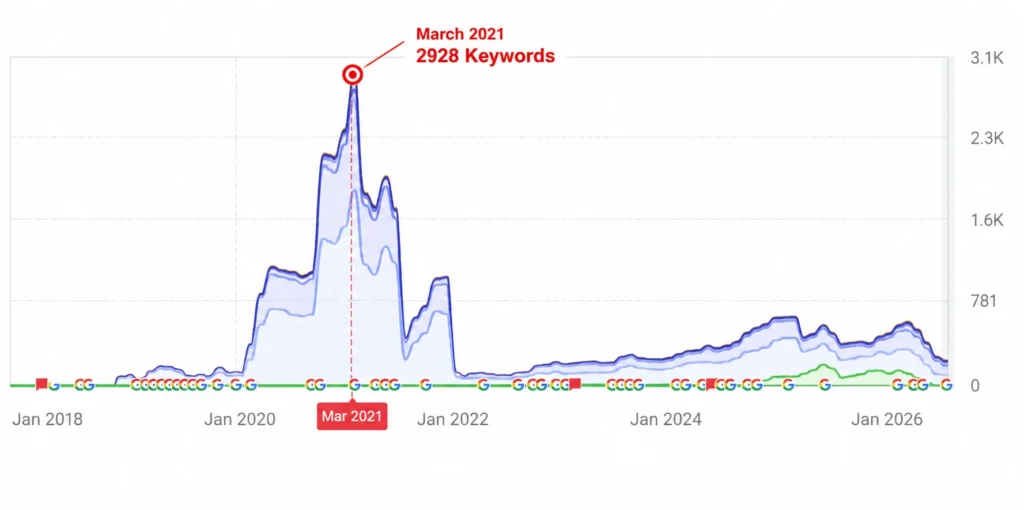
In the March 2021 dataset, the website was ranking for 2,928 tracked keywords.
By February 2022, that figure had fallen to 53.
That represents a reduction of approximately:
98.2%
The decline was not restricted to low-ranking keywords.
The number of tracked keywords appearing in Google’s Top 10 fell from 81 to 5, a reduction of approximately 93.8%.
The available historical website source code also shows substantial changes to the site’s information architecture, URL structure and on-page SEO implementation during this period.
This investigation does not claim that a website redesign, by itself, caused the ranking collapse.
Instead, it reconstructs the sequence of events and identifies the technical changes that occurred around the same periods as the major visibility disruptions.
And the investigation does not end with historical data.
The current 2026 website was also examined.
The current crawl identified:
- 55 URLs returning HTTP 404
- 340 internal inlink instances pointing toward those 404 URLs
- Core URLs such as
/book-appointment/returning 404 despite having 106 internal inlinks - A mixture of correctly implemented and unresolved legacy URL redirects
- Historical blog URLs from the previous website that are no longer resolving
- A separate Aikya-branded website hosted on a development company’s subdomain
- The separate website appearing in Google search results
- Links from the current Aikya website leading users into that separate domain
These findings do not necessarily indicate malicious activity, nor do they establish that every issue directly caused an organic-search loss.
They do, however, establish a clear picture of incomplete website migration, accumulated technical debt and avoidable digital infrastructure problems.
1. Why Was This Investigation Conducted?
This investigation began with a much narrower question:
What happened to Aikya Fertility’s website?
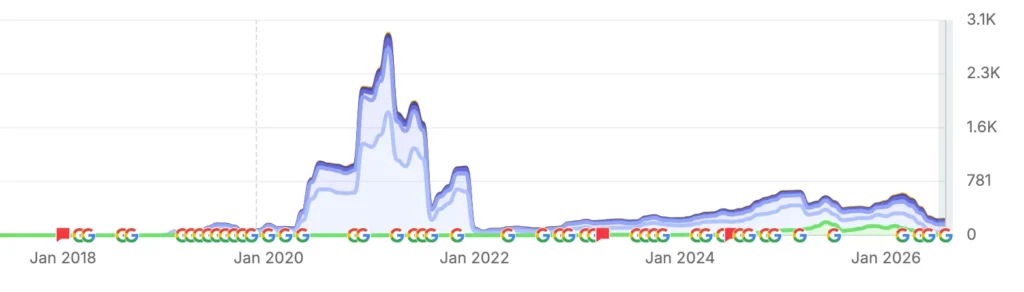
The historical search visibility graph raised an obvious question.
The website had once performed substantially better in organic search. At some point, something changed.
Rather than evaluating the current website in isolation, we decided to examine the domain’s historical digital footprint and compare different versions of the website over time.
This approach matters.
A conventional website audit tells us what is wrong today.
A forensic website investigation asks:
What was the website like before? What changed? When did it change? What happened afterward? And which problems remain today?
That distinction forms the basis of this report.
2. The One-Minute Version: What Happened?
If you are a business owner, CEO or management executive and don’t have time to read the complete investigation, this is the section to read.
The simplified timeline
2019–2021
Aikya’s website develops an increasingly significant organic-search footprint.
↓
March 2021
The documented historical peak:
2,928 tracked keywords
↓
July 2021
A substantially different website architecture is observable.
The URL structure has changed considerably.
↓
January–February 2022
A further website implementation is visible.
Important SEO elements and aspects of the previous architecture have changed or disappeared.
↓
February 2022
Organic visibility reaches an extreme low:
53 tracked keywords
↓
December 2022
The website shows evidence of partial SEO remediation, including restoration of a descriptive title and meta description.
↓
2023–2025
Organic visibility gradually recovers from the 2022 floor.
↓
December 31, 2025
An independent patient-acquisition and website analysis is sent to Aikya management.
No response was received.
↓
January 2026 onward
A substantially different WordPress-based website implementation appears in the evidence reviewed for this investigation.
↓
February–March 2026
The historical ranking graph shows another major reduction in visibility, from more than 650 tracked keywords to approximately 220.
↓
August 2026
The current website is examined.
The investigation finds:
- 55 HTTP 404 URLs
- 340 internal inlink instances to those URLs
- Incomplete legacy URL handling
- Broken historical blog URLs
- Conversion-related broken URLs
- A separate Aikya-branded domain
- Google-indexed pages on that separate domain
- Cross-domain links from the primary website
- And numerous additional UI, UX and technical issues.
3. The 2021 Performance Peak
The historical ranking data supplied for this investigation shows March 2021 as the strongest documented period.
At that point, the site was ranking for:
| Ranking position | Keywords |
|---|---|
| Top 3 | 18 |
| 4–10 | 63 |
| 11–20 | 130 |
| 21–50 | 928 |
| 51–100 | 1,789 |
| Total | 2,928 |
The important number isn’t merely the total.
The site had 81 tracked keywords in the Top 10.
This indicates that the domain wasn’t simply appearing somewhere in Google’s index.
It had accumulated a meaningful search footprint across multiple ranking positions.
4. Then the Website Architecture Changed
The historical source material shows a substantially different implementation by July 2021.
This is particularly important because the changes were not merely cosmetic.
The website’s URL architecture had changed – significantly.
The earlier website contained URLs with a different structural hierarchy.
The July 2021 implementation shows substantially different URL patterns, including direct, simplified URLs for services and medical topics.
For example, the July 2021 website data contains URLs such as /menopause, /pre-conception-counseling, /dilation-and-curettage, and dedicated doctor URLs under a different structure.
This matters because changing a URL is not equivalent to changing a colour, font or homepage layout.
A URL can represent a search engine’s historical understanding of a piece of content.
When URLs change, the migration has to preserve the relationship between:
old URL → new URL → accumulated signals → internal links → search engine index
If that chain is broken, a redesign can inadvertently discard part of the value accumulated by the previous website.
Representative URL Changes Observed During the 2021 Rebuild
| First-generation URLs | July 2021 URLs |
|---|---|
/fertility-services/treatment-procedures/ivf | /ivf |
/fertility-services/treatment-procedures/iui | /iui |
/fertility-services/treatment-procedures/icsi | /icsi |
/fertility-services/treatment-procedures/imsi-pics | /imsi-pics |
/fertility-services/infertility/what-is-infertility | /what-is-infertility |
/fertility-services/infertility/male-causes | /male-causes |
/gynec-surgeries/diagnostic-laparoscopy-for-infertility | /diagnostic-laparoscopy-for-infertility |
/gynec-surgeries/surgery-for-ectopic-pregnancy | /surgery-for-ectopic-pregnancy |
/gynec-surgeries/ovarian-drilling-for-poly-cystic-ovaries | /ovarian-drilling-for-poly-cystic-ovaries |
/departments/gynecology/menopause | /menopause |
/departments/gynecology/pcos | /pcos |
/departments/gynecology/pre-conception-counseling | /pre-conception-counseling |
/obstetrics/normal-pregnancy-care/labor-and-birth-education | /labor-and-birth-education |
/obstetrics/normal-pregnancy-care/pregnancy-and-diet | /pregnancy-and-diet |
This was not a minor URL cleanup. It was a substantial restructuring of the website’s information architecture.
The examples above are representative rather than exhaustive; the historical source contains many additional URL changes across the site’s fertility, gynecology, laparoscopy and obstetrics sections.
The older implementation organised pages according to their subject hierarchy:
/fertility-services/
/treatment-procedures/
/ivf
/iui
/icsi
The July 2021 implementation flattened those same destinations:
/ivf
/iui
/icsi
The same pattern appears across multiple sections of the website.
This means that a large number of established URLs changed simultaneously, including URLs representing commercially important fertility treatments, infertility information, gynaecological procedures and pregnancy-related information.
The significance is not that shorter URLs are inherently better or worse. The significance is that dozens of established URLs changed during a major website redevelopment, creating a migration event in which the relationship between the previous URLs and their replacements needed to be deliberately preserved.
5. Did the 2021 Migration Use 301 Redirects?
This investigation deliberately avoids claiming something that the available historical evidence cannot prove.
We have established that the URL architecture changed substantially.
And importantly, the real question is:
“Did the migration preserve the value of the old URLs?”
We have not established conclusively whether a comprehensive 301 redirect strategy was implemented during the 2021 migration.
Therefore:
The historical redirect status remains unproven.
This is an important distinction.
The subsequent ranking collapse is consistent with a migration-related loss of accumulated search signals, but the available evidence does not permit us to state that missing 301 redirects were the sole cause.
In forensic terms:
Observed
Major URL architecture change.
Observed
Subsequent severe organic visibility decline.
Not established
Exact redirect configuration at the time of migration.
Conclusion
A strong migration-related hypothesis exists, but direct causation cannot be proven from the available evidence alone.
6. January 2022: The Critical Website State
By January 2022, Aikya Fertility’s website had reached a critical point in its documented search-performance history.
Historical ranking data places the website at its lowest recorded level of organic visibility around this period.
To understand what the website actually looked like during this phase, the investigation examined historical versions of the website at the HTML source-code level, rather than relying solely on screenshots or ranking charts.
Multiple pages were individually examined from January 2022, including the homepage and pages covering specific medical conditions, treatments, procedures and educational content.
Examples include:
/medical-history-and-examination.html/semen-analysis.html/menopause.html/abnormal-vaginal-discharge.html/pcos.html/blocking-blood-flow-to-fibroids.html/ovarian-drilling-for-poly-cystic-ovaries.html/surgery-for-ectopic-pregnancy.html/srishti-program.html/blog.html/intrauterine-insemination.html/fertility.html
Additional historical captures were available for individual blog articles.
The archived captures are individually timestamped to January 25–26, 2022.
For example,
- the
/medical-history-and-examination.htmlpage was captured on January 25, 2022 at 10:09:17, /intrauterine-insemination.htmlat 10:24:19, and/surgery-for-ectopic-pregnancy.htmlat 10:55:50.
This provides a contemporaneous view of the website during the period immediately preceding the documented January 2022 visibility floor.
The historical data source is explicitly dated January 26, 2022.
The implementation visible at this stage differs substantially from the earlier website.
The source contains a different front-end asset structure, including a newer JavaScript/CSS ecosystem and a different implementation from the earlier architecture.
This is significant because it establishes that the website wasn’t simply experiencing a search ranking fluctuation while remaining technically unchanged.
There had been substantial website-level intervention.
6.1 A Site-Wide Metadata Pattern Becomes Visible
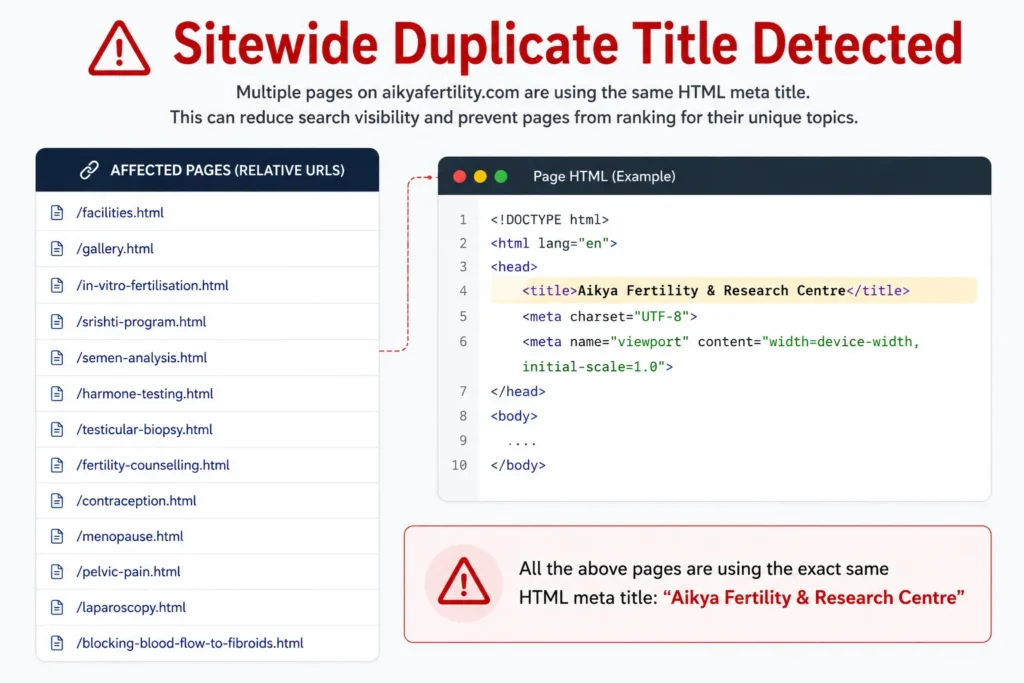
One of the most significant findings in the historical source code is the repeated use of the same HTML <title> across different pages.
The /medical-history-and-examination.html page contains:
Aikya Fertility & Research Centre
as its HTML title.
The /surgery-for-ectopic-pregnancy.html page contains the same title.
The /intrauterine-insemination.html page contains the same title as well.
These are not three versions of the same page.
They are separate URLs addressing substantially different subjects and search intents.
Yet their HTML source identifies all three with the same generic title:
Aikya Fertility & Research Centre
This is important because the website clearly contained page-specific medical information, but the page-level title signal did not distinguish those subjects.
6.2 Why This Finding Matters
An individual page about intrauterine insemination and an individual page about ectopic-pregnancy surgery represent very different topics.
A page about medical history and examination represents another distinct topic again.
From a search-engine perspective, these pages therefore have different subject matter and potentially different search queries for which they could be relevant.
Yet the recorded historical implementation presented the same generic HTML title for each.
The contrast is significant:
| Page | Subject | Archived HTML title |
|---|---|---|
/medical-history-and-examination.html | Medical history & examination | Aikya Fertility & Research Centre |
/surgery-for-ectopic-pregnancy.html | Ectopic pregnancy surgery | Aikya Fertility & Research Centre |
/intrauterine-insemination.html | IUI treatment | Aikya Fertility & Research Centre |
Three different medical subjects.
Three different URLs.
One identical HTML title.
That is a directly observable implementation issue – not an inference.
6.3 This Was Not an Isolated Page Error
The significance of the finding increases because the same pattern appears across independently captured pages.
The source records identify different URLs and different capture times, while the HTML title remains identical – site-wide.
This suggests that the title implementation was being applied systematically rather than representing an isolated oversight on one particular page.
The available evidence therefore supports describing this as a repeated site-level implementation pattern within the pages examined.
6.4 The Website Was Not a Bare or Incomplete Implementation
The January 2022 website was not technically empty.
The historical source contains multiple CSS frameworks and front-end assets, JavaScript libraries, animation components, enquiry functionality and a popup enquiry mechanism.
The source also contains client-side validation for enquiry-form fields, including name and telephone-number validation.
This is relevant to the forensic reconstruction because it demonstrates that substantial development work had gone into the website.
The problem identified here is therefore not simply that the website was unfinished.
Rather, the evidence shows a website with considerable front-end implementation whose individual medical pages were nevertheless carrying the same generic HTML title.
6.5 An Evidence Boundary We Will Not Cross
The investigation must distinguish between what the source code proves and what it merely suggests.
The supplied January 2022 source captures clearly demonstrate the repeated HTML <title> value.
However, the supplied source files do not provide sufficient evidence for us to state that every page also carried an identical meta description.
Accordingly, this report does not make that claim.
That restraint is intentional.
A forensic investigation is strongest when it identifies what can be demonstrated, clearly separates inference from fact, and avoids turning a plausible explanation into a stated fact.
The evidence currently establishes:
Multiple distinct medical pages were using the same generic HTML title during the January 2022 period.
That finding stands independently.
6.6 The Timing Is Significant
The metadata findings become considerably more important when placed against the site’s historical performance.
The website had previously accumulated a substantial organic-search footprint.
During the intervening period, the website underwent substantial architectural and implementation changes.
By January 2022, historical source code demonstrates repeated page-level SEO weaknesses across independently captured medical pages.
By February 2022, the site’s documented keyword footprint had fallen to its lowest observed level.
The evidence does not establish that the duplicate titles alone caused the visibility collapse.
It does, however, establish that the website was operating with identifiable page-level search-signal weaknesses during the period immediately surrounding the lowest documented performance.
That distinction matters.
7. February 2022: The Visibility Collapse
The ranking data provides the clearest numerical indication of what happened.
In March 2021, the website was ranking for:
2,928 keywords
By February 2022, that figure had fallen to:
53 keywords
This represents a decline of approximately 98.2% in the documented Top-100 keyword footprint.
Only approximately 1.8% of the March 2021 keyword footprint remained within the measured Top 100 by February 2022.
The distribution of those rankings makes the deterioration even more significant.
| Ranking position | March 2021 | February 2022 | Change |
|---|---|---|---|
| Top 3 | 18 | 3 | -15 |
| 4–10 | 63 | 2 | -61 |
| 11–20 | 130 | 2 | -128 |
| 21–50 | 928 | 14 | -914 |
| 51–100 | 1,789 | 32 | -1,757 |
| Total | 2,928 | 53 | -2,875 |
The Top-10 footprint alone fell from 81 keywords to 5.
The Top-20 footprint fell from 211 keywords to 7.
And the Top-50 footprint fell from 1,139 keywords to 21.
This was therefore not simply a case of rankings moving slightly downward.
The site’s measurable search footprint contracted dramatically across every major ranking band.
7.1 The Collapse in Context
The numbers become more significant when viewed alongside the archived website evidence from the preceding section.
The documented sequence is:
March 2021
2,928 ranking keywords
↓
2021
Major website and URL-architecture changes
↓
January 2022
Archived website showing repeated generic page titles across distinct medical pages
↓
February 2022
53 ranking keywords
↓
Subsequent period
Gradual recovery of organic visibility
This chronology does not prove that one specific technical change caused the collapse.
It does establish that the collapse occurred within a broader period of substantial website change and identifiable implementation weaknesses.
7.2 The Scale of the Loss
The magnitude deserves to be stated plainly.
Between March 2021 and February 2022:
- 2,875 tracked Top-100 keyword positions were lost.
- The total keyword footprint fell from 2,928 to 53.
- Top-3 rankings fell from 18 to 3.
- Top-10 rankings fell from 81 to 5.
- Top-20 rankings fell from 211 to 7.
- Top-50 rankings fell from 1,139 to 21.
The most severe contraction occurred outside the highest positions, which is expected in a broad visibility collapse: thousands of previously discoverable search terms were no longer represented within the measured Top 100.
This is materially different from a normal fluctuation in a handful of important keywords.
7.3 What the Evidence Allows Us to Say
It would be tempting to write:
“The website’s redesign caused the 98.2% ranking loss.”
That conclusion would go beyond the evidence currently available.
The investigation cannot independently establish a single causal mechanism from the historical source code and ranking data alone.
Several technical factors could potentially contribute to a migration-related visibility loss, including:
- URL changes,
- incomplete preservation of historical URLs,
- changes to internal linking,
- changes to page-level signals,
- content changes,
- indexing changes or other implementation differences.
The purpose of this investigation is therefore not to manufacture certainty.
It is to identify the documented sequence of events and the technical evidence surrounding it.
7.4 What We Can Establish
The available evidence supports the following conclusions:
Finding 1 — The website had substantial organic visibility before the decline.
In March 2021, the documented keyword footprint was 2,928 keywords, including 18 Top-3 rankings and 81 Top-10 rankings.
Finding 2 — A substantial website transition occurred during the period between the peak and the collapse.
The site’s URL architecture and implementation changed materially during this period.
Finding 3 — By January 2022, identifiable page-level SEO weaknesses were present.
Archived source code shows different medical pages using the identical generic HTML title:
Aikya Fertility & Research Centre
Finding 4 — By February 2022, organic visibility had reached its documented floor.
The tracked keyword footprint had fallen from 2,928 to 53.
Finding 5 — The relationship is temporally significant, but causation is not being asserted from this evidence alone.
The proximity between the website changes, the January 2022 implementation state and the February 2022 visibility collapse warrants forensic attention.
It does not, by itself, prove that any single implementation defect was responsible for the entire decline.
7.5 The Forensic Question
The important question is therefore not simply:
“Why did rankings fall?”
The more useful question is:
“What changed between the period of strongest documented visibility and the period of near-total visibility loss – and which of those changes can be independently demonstrated?”
That question changes this from an ordinary SEO audit into a historical reconstruction.
- The archived source code gives us a view of what the website actually contained at the time.
- The ranking history tells us what happened to its search visibility.
- The subsequent recovery provides another point of comparison.
Taken together, these records allow the website’s decline to be examined as a sequence of technical and search-performance events rather than as a collection of isolated SEO errors.
8. December 2022: Evidence of Partial Recovery
The next important clue comes from the December 2022 website snapshot.
The December 3, 2022 data contains:
Title:
Aikya Speciality Centre – Best Infertility Treatments in Banglore
and a descriptive meta description.
This is significant because the earlier January 2022 implementation did not exhibit the same level of visible title/description optimization.
At the same time, the December 2022 data still does not show evidence of a canonical tag or JSON-LD structured-data block in the searched source.
This suggests something important:
The recovery was not necessarily the result of a complete return to the old website.
Instead, the evidence is consistent with incremental remediation of the newer implementation.
That distinction matters.
9. A Website Can Recover Without Returning to Its Old Architecture
This is one of the most interesting observations from the historical record.
The .html-based architecture remained.
The website did not simply revert to its pre-2021 state.
Yet organic visibility began recovering very mildly and gradually.
This means we should not conclude:
“The new URL structure itself caused the entire collapse.”
The more defensible interpretation is that multiple factors may have interacted during the migration period.
Potential contributing factors include:
- URL restructuring
- migration handling
- setting single meta title site-wide
- loss or alteration of historical signals
- changes to page-level SEO implementation
- changes to internal linking
- changes to content architecture
- indexation behaviour
- other factors not observable from the accumulated evidence
This is exactly why forensic analysis is more useful than hindsight certainty.
10. September 2025: The Previous Website Was Still There
A historical website capture from September 2, 2025 shows that the older implementation was still operating before the latest redesign.
The archived source itself records the September 2, 2025 capture date.
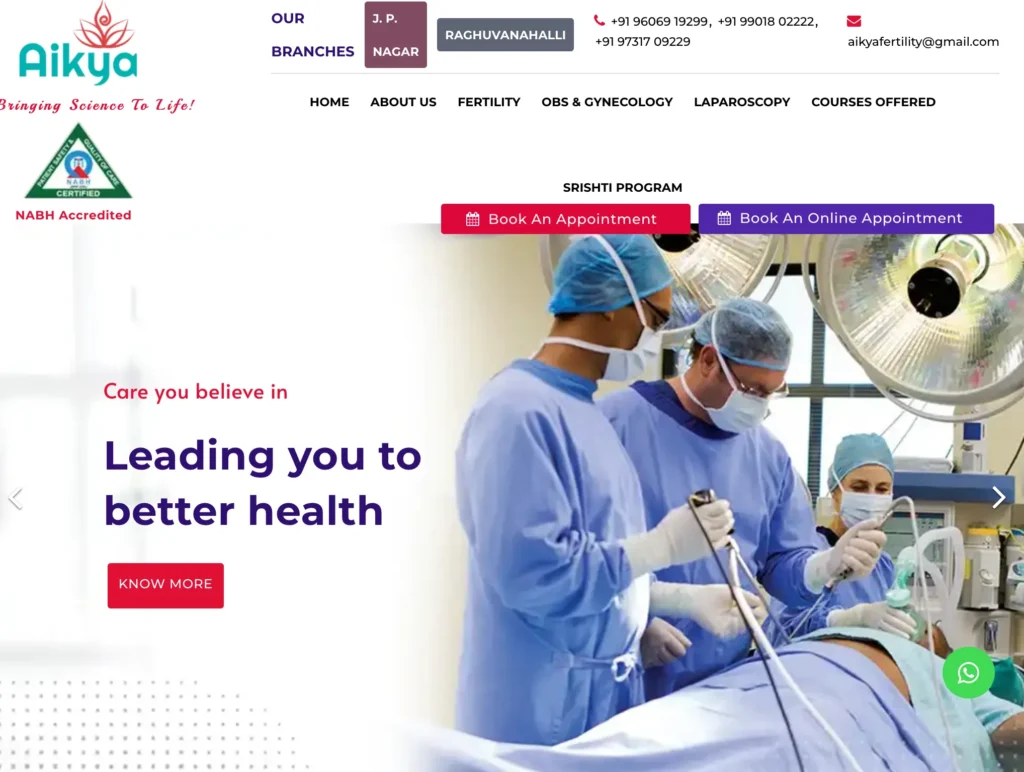
The source also contains the older site’s established front-end structure and implementation.
The footer explicitly identifies the website’s development attribution in that historical version.
For the purposes of this public investigation, the developers are intentionally anonymised as:
Developer 1
and
Developer 2
Their identities are not relevant to the technical conclusions.
The objective is to document what happened to the website, not to publicly assign blame to individual vendors.
11. December 2025: An Independent Warning Was Sent
On December 31, 2025, an independent website and patient-acquisition analysis was sent to Aikya management.
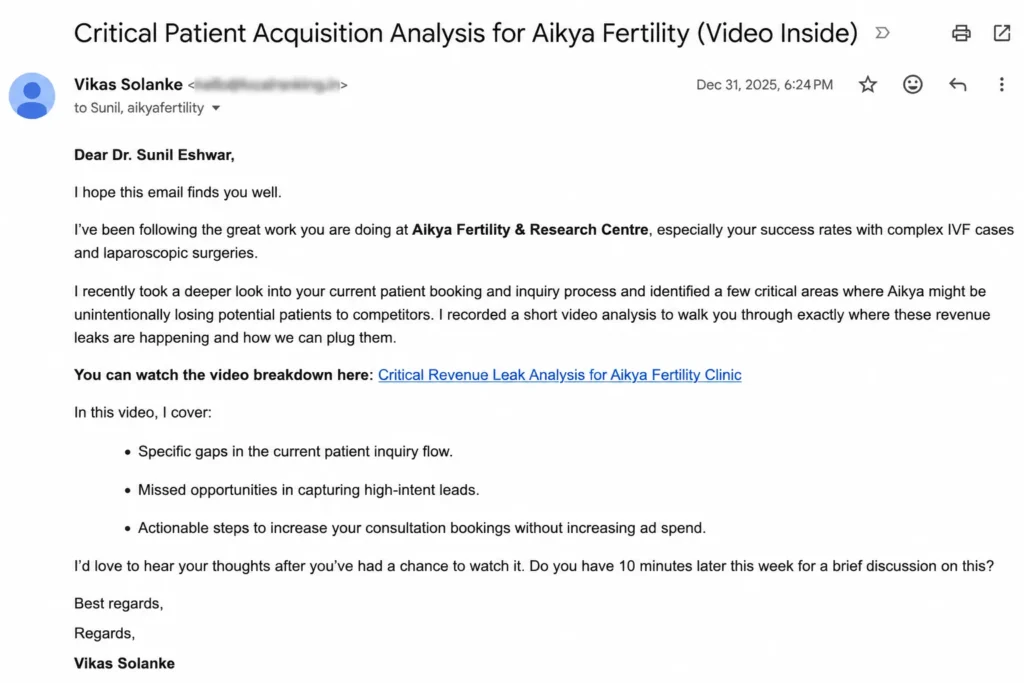
The analysis focused on weaknesses observed in the patient inquiry and booking journey, including potential leakage of genuine enquiries. The communication included a recorded video analysis and requested a short discussion with management.
No response was received.
But the website changed in a very short time.
Within the following period, a substantially different, custom-built WordPress implementation emerged.
And this is where we must be exceptionally careful.
We are not claiming the email caused the redesign.
The timing is interesting.
It is worth documenting.
But correlation is not causation.
The temporal proximity is documented for completeness. No causal relationship between the communication and subsequent redevelopment is asserted.
12. 2026: A New Website Implementation
The newer website represents another substantial change in the site’s digital infrastructure.
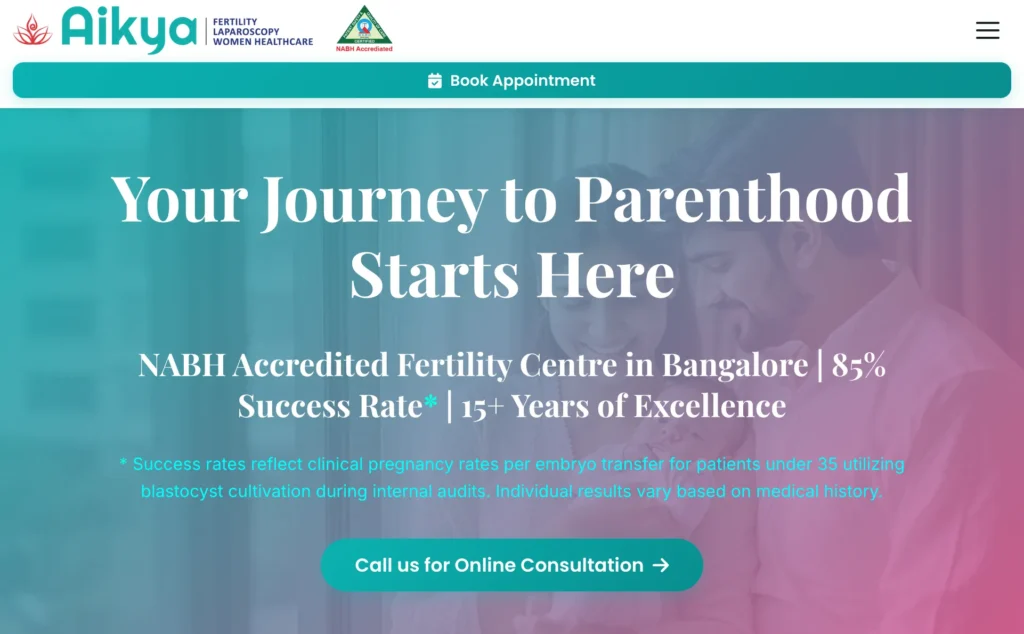
The evidence accumulated for the new implementation shows a WordPress-based website using a custom theme and modern SEO infrastructure.
The separate development environment contains:
- WordPress
- Yoast SEO
- canonical tags
- Open Graph metadata
- Twitter metadata
- JSON-LD structured data
- modern responsive components
- a new media library
- new page structures
The source also contains content and assets dated from January 2026 onward.
This is a materially different implementation from the 2025 website.
13. And Then the Search Visibility Fell Again
The historical performance graph supplied for this investigation shows another significant decline that started around February–March 2026 and bottomed around July 2026
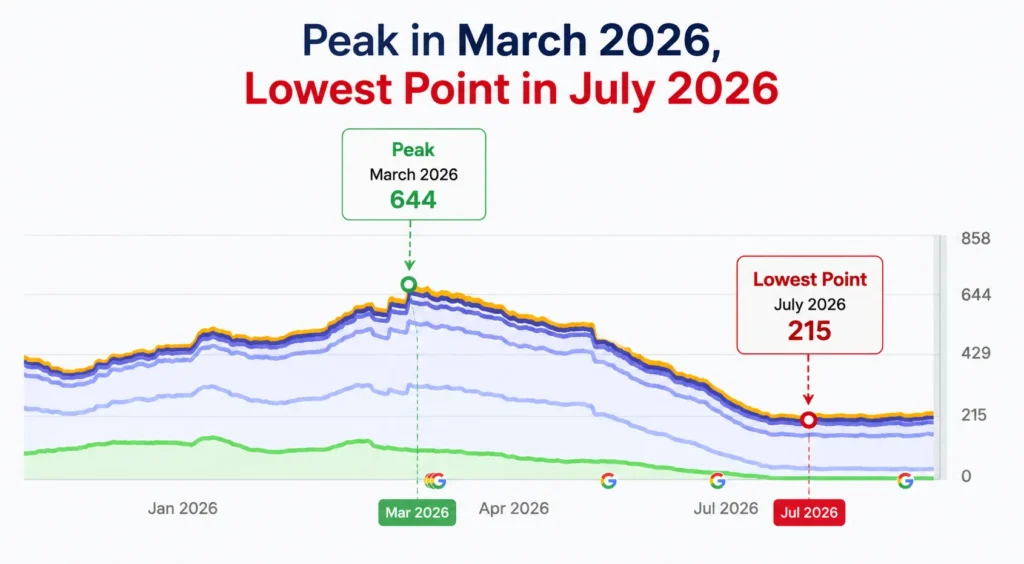
The site moved from around 650 tracked keywords to approximately 215, a reduction of roughly two-thirds.
Once again, the timing deserves attention.
A major website redevelopment occurred.
A major organic visibility reduction occurred around the same broad period.
But once again:
We do not claim causation.
The appropriate forensic conclusion is:
A second major organic visibility decline is temporally associated with another substantial website redevelopment. Further evidence would be required to isolate the exact causes of the decline.
14. The Current Website: What Does the Digital Crime Scene Look Like?
Now we move from historical reconstruction to the current website.
And this is where the investigation gets particularly interesting.
The current website was crawled and its response behaviour analysed.
The result:
55 URLs currently return HTTP 404
These are not merely historical URLs discovered somewhere in an old archive.
They are URLs that are currently being referenced by the live website to the immediate previous website that existed before this redesign.
The crawl identified:
340 internal inlink instances
pointing toward those 55 non-existent URLs.
15. We Are Not Publishing the Complete 404 Inventory
There is no reason to publish the entire list.
This investigation is intended to demonstrate the nature and scale of the problem—not to provide a technical remediation spreadsheet.
A small number of representative examples are sufficient.
Example 1: /jp-nagar/
The URL returns a 404 error.
Yet it is referenced by 26 internal links on the live website.
Example 2: /raghuvanahalli/
Also returning 404, with 26 internal links pointing toward it.
Example 3: /iui-treatment/
A non-existent URL receiving 10 internal inlinks.
And these are only examples.
There are 52 additional 404 URLs identified in the current data accumulated.
In total:
55 URLs → HTTP 404
340 internal inlink instances → those URLs
Only representative examples are disclosed in this public investigation.
16. The Current Migration Is Not Completely Broken — And That’s Important
There is another detail that makes this investigation more interesting.
The current website does contain legitimate redirects.
Several historical URLs from the previous implementation have been redirected successfully to newer destinations.
This demonstrates that URL migration handling has been implemented for at least a portion of the legacy URL inventory.
The problem is therefore not:
“No redirects were implemented.”
The evidence points instead toward:
Incomplete migration handling
Some historical URLs resolve successfully.
Others return 404.
The result is an inconsistent legacy URL landscape.
17. The Blog Is Another Unresolved Migration Area
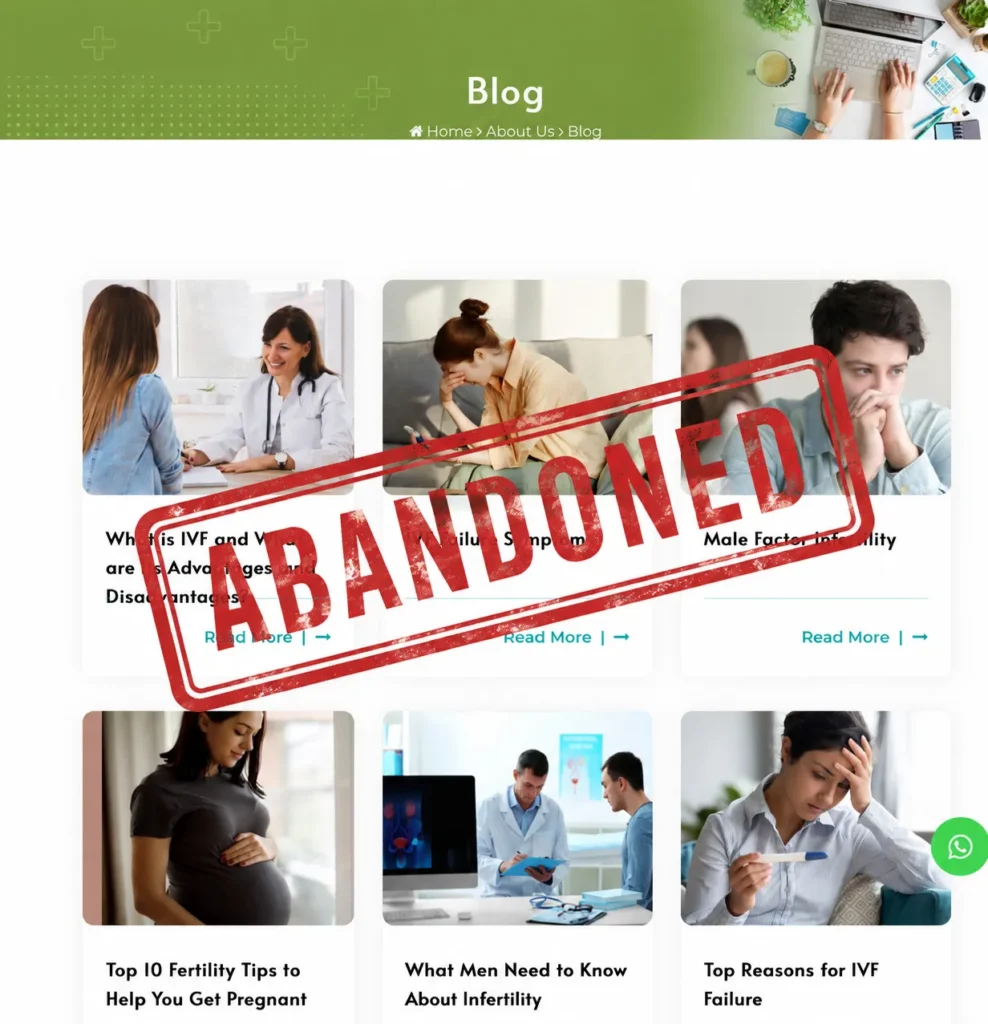
The previous website contained a substantial collection of blog/news content.
The current website does not appear to have preserved the old blog URL structure.
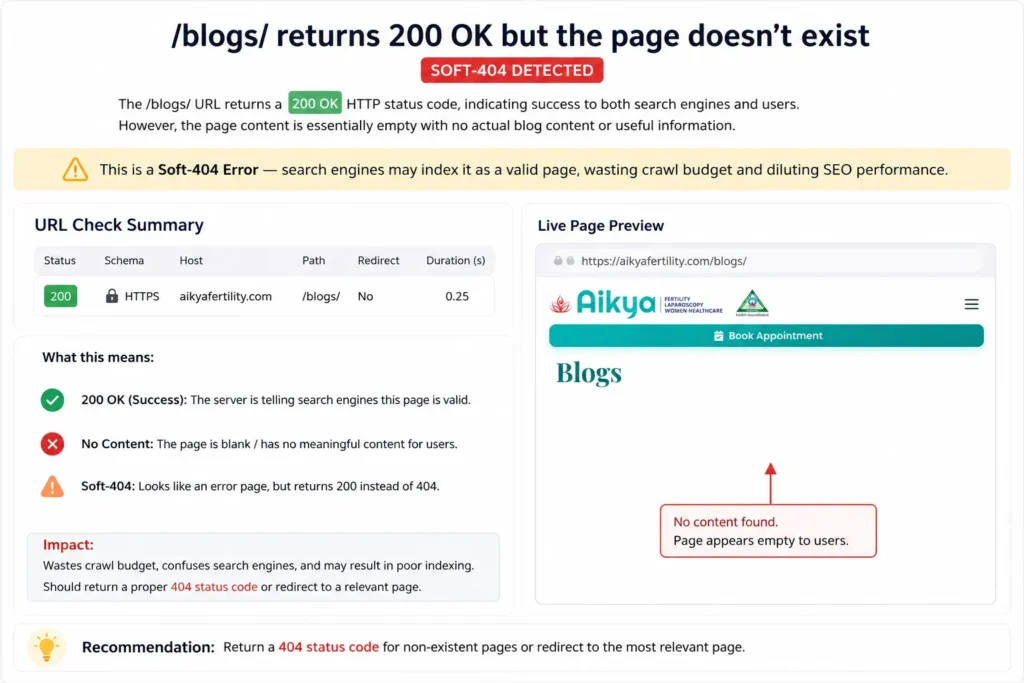
Historical blog URLs from before the January 2026 redevelopment return 404 response codes.
Importantly, many of these URLs are not necessarily discoverable through the current site’s internal navigation.
That means a normal crawl beginning from the current homepage may not expose the full extent of the historical URL loss.
This is an important forensic limitation.
The absence of a URL from the current crawl does not prove that the URL never existed.
It may simply mean that the current website no longer links to it.
Historical evidence is therefore essential when evaluating website migrations.
18. The Separate Aikya Website
One of the more unusual findings concerns a separate website hosted on a development-domain subdomain:
ivfcentre.nexusprisminnovations.com
Based on the source-code evidence and manual investigation, this appears to have originally functioned as the environment in which the new website was developed and presented for client review.
That in itself is not unusual.
Development teams frequently build websites on temporary or staging environments before moving them to the client’s production domain.
The unusual part is what happened next.
The website appears to have remained publicly accessible.
It contains substantial Aikya-branded content.
It contains its own SEO implementation.
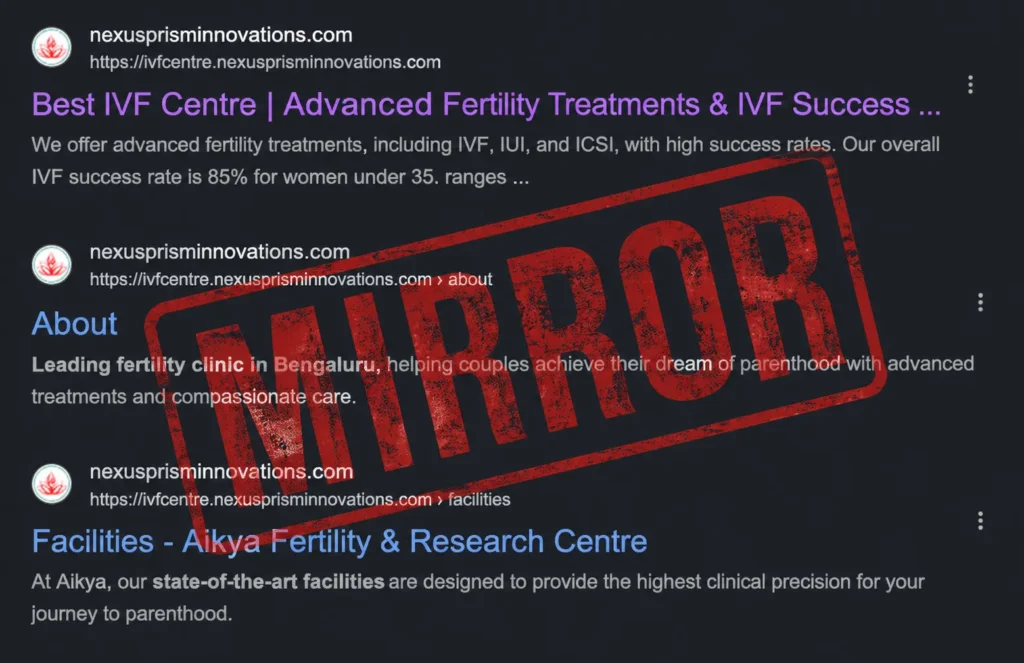
And pages from that domain are appearing in Google search results.
19. The Mirror Site Is Not an Empty Staging Page
Manual Google verification confirmed that the separate domain has multiple Aikya-branded pages represented in Google’s search results.
The supplied data shows results including:
- Homepage
- About
- Facilities
- Treatments
- Courses
- Contact
and other pages.
This is a particularly important finding because it demonstrates that the development environment is not merely sitting behind an inaccessible staging wall.
It has become part of the public web.
20. The Mirror Website Contains Its Own SEO Signals
The separate implementation contains a canonical URL pointing to itself, Open Graph metadata and JSON-LD structured data.
Its source identifies the site as:
Aikya Fertility & Research Centre
and uses the mirror domain as its own website URL.
The mirror also contains extensive Aikya-branded treatment content, including dedicated IVF treatment pages.
This does not automatically make the implementation malicious or incorrect.
If the domain is an authorised production property, there may be a legitimate reason for its existence.
However, if it is merely an old development/staging environment, leaving it publicly indexable creates unnecessary search-engine and brand-management complexity.
21. And the Primary Website Links Into It
This is where the situation becomes particularly unusual.
The current website does not merely coexist with the separate domain.
Some website elements direct users into it.
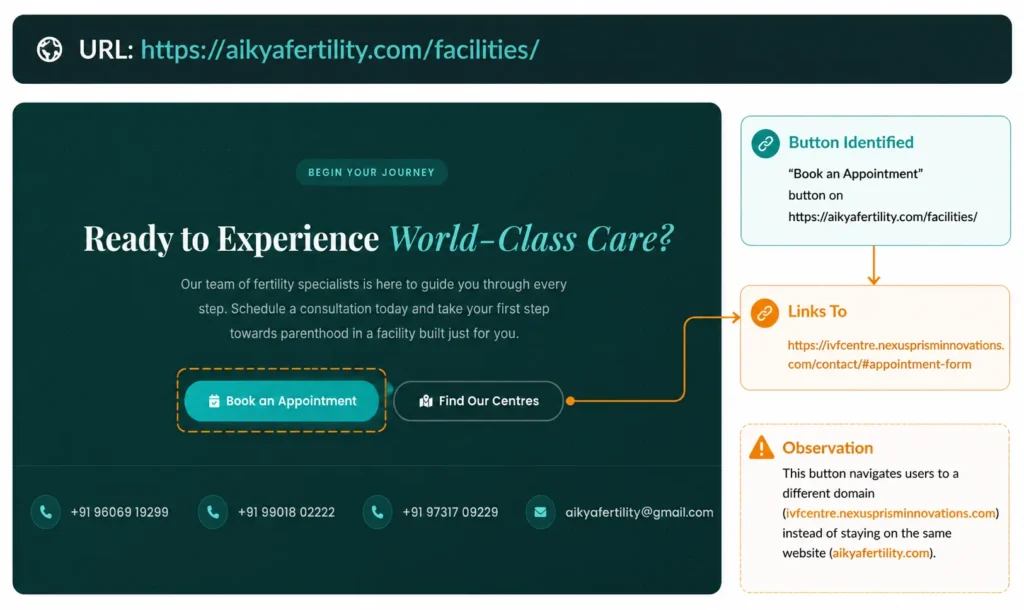
The mirror’s own navigation and appointment infrastructure is fully built around the mirror domain.
The mirror is therefore not simply an abandoned development folder.
It represents a functioning, publicly accessible Aikya website environment.
22. Why This Matters
There are several questions management should be asking:
- Is the development domain supposed to be public?
- Is it intended to be indexed?
- Is it supposed to compete with the primary domain in Google?
- Should its pages have been redirected or canonicalised?
- Should the development environment have been blocked from search engines?
- Why are users being sent from the primary website into it?
- Who owns and controls the domain?
- What happens if the development company changes the site or removes the environment?
None of these questions require an accusation.
They simply require answers.
23. Another Current-Site Example: Template Failure
The investigation also identified a visible implementation defect on the current website.
On one doctor profile, the website displays a technical field placeholder instead of a proper phone number:
field_doctor_phone
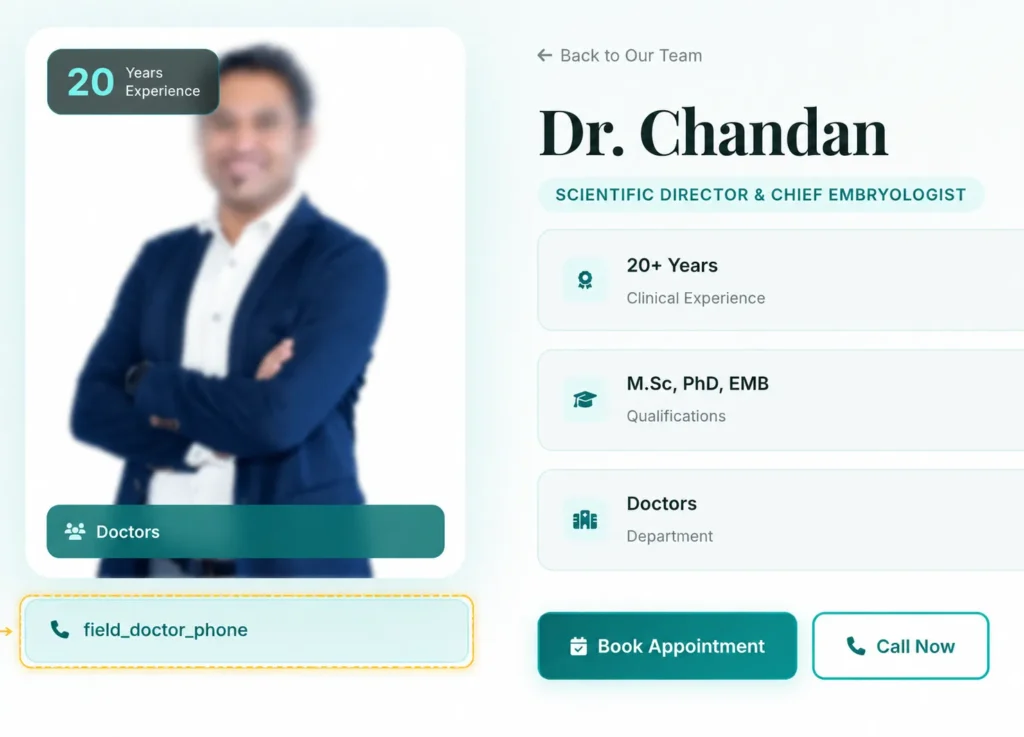
This is the kind of issue that is easy to overlook during development but immediately visible to a user.
It is also useful forensic evidence because the problem is observable at the presentation layer—not merely something buried inside source code.
24. What About the Historical Developers?
This report deliberately does not identify the individual web-development companies involved.
For the purposes of this investigation, implementations are referred to simply as:
Developer 1
and
Developer 2
The reason is simple.
The purpose of this investigation is not to embarrass a vendor.
It is to document what happened to the website.
A website can have a technically beautiful design and still have a poor migration.
A website can have a poor design and still rank extremely well.
A development company can do excellent work on one project and make mistakes on another.
The evidence should therefore be judged independently of vendor identity.
25. What Can We Actually Prove?
This is arguably the most important section of the entire report.
| Finding | Evidence status |
|---|---|
| Aikya’s organic visibility reached 2,928 tracked keywords in March 2021 | Observed in historical data |
| Visibility fell to 53 tracked keywords by February 2022 | Observed in historical data |
| Top-10 visibility fell from 81 to 5 | Observed in historical data |
| Website architecture changed substantially during 2021 | Observed in historical source material |
| URL structures changed | Observed |
| The 2022 website represented a materially different implementation | Observed |
| SEO implementation changed between versions | Observed in source comparison |
| Website visibility subsequently recovered | Supported by historical performance data |
| A different website was still operating in September 2025 | Observed in archived source |
| An independent website analysis was sent in December 2025 | Documented |
| A materially different WordPress implementation appeared in 2026 | Observed |
| Organic visibility declined again around Feb–Mar 2026 | Supported by historical data |
| Current website contains 55 HTTP 404 URLs | Observed in current crawl |
| Those URLs receive 340 internal inlink instances | Observed in current crawl |
/book-appointment/ has 106 internal inlink instances while returning 404 | Observed |
| Some legacy URLs have been redirected | Observed |
| Legacy URL handling is incomplete | Observed |
| Historical blog URLs remain unresolved | Observed from available testing |
| Separate Aikya-branded development domain exists | Observed |
| Multiple pages on that domain appear in Google | Manually verified |
| Primary website links to the separate domain | Observed |
| The separate domain caused the 2026 ranking decline | Not established |
| The 2021 migration had no 301 redirects | Not established |
| The 2021 migration alone caused the 2022 collapse | Not established |
| The December 2025 communication caused the redesign | Not established |
26. What We Cannot Know From The Available Evidence
There are limits to what can be reconstructed retrospectively.
We do not have access to:
- historical Google Search Console data
- historical server logs
- historical redirect configuration files
- internal developer deployment records
- Google manual-action information
- the exact date/time each production migration was deployed
- the full historical URL inventory
- the complete historical indexation state of every URL
Therefore, some questions remain unanswered.
And that’s okay.
A serious investigation should be comfortable saying:
We don’t know.
rather than manufacturing an answer.
27. The Larger Pattern
When the individual events are viewed together, a pattern emerges.
First major transition
Website architecture changes.
↓
Organic visibility collapses.
↓
Partial recovery follows.
↓
Second major transition
Website is substantially rebuilt again.
↓
Organic visibility declines again.
↓
Current state
The website contains a mixture of:
- successfully redirected legacy URLs
- unresolved 404 URLs
- broken internal references
- historical content loss
- conversion-path problems
- cross-domain dependencies
- publicly accessible development infrastructure
- additional UX/UI defects
This does not prove that every performance decline was caused by redevelopment.
It does demonstrate something more useful:
Website migrations have repeatedly represented periods of significant digital risk for this domain.
28. The Core Lesson
Website redesigns are often evaluated visually.
Management asks:
“Does the new website look better?”
Developers ask:
“Does the new website work?”
Marketing teams ask:
“Does the new website generate enquiries?”
But there is another question that should always be asked:
“What happened to everything the old website had already accumulated?”
Its URLs.
Its rankings.
Its internal links.
Its indexed pages.
Its backlinks.
Its content.
Its search-engine signals.
Its conversion pathways.
Its historical authority.
A redesign that preserves the appearance of a business but fails to preserve its accumulated digital assets can become an extremely expensive redesign.
29. Final Forensic Assessment
Based on the historical source material, ranking data, current website evidence and current URL testing reviewed for this investigation, the Aikya Fertility domain has experienced multiple major website implementation and architectural transitions during the period examined.
The first major transition was followed by a documented decline from 2,928 tracked keywords to 53.
The second major transition was followed by another substantial reduction in tracked organic visibility.
The current implementation is newer and, in several respects, technically more sophisticated than the older website.
However, the current implementation is not technically clean.
The investigation identified:
55 current HTTP 404 URLs
340 internal inlink instances pointing toward them
106 inlinks to the broken /book-appointment/ URL
Incomplete legacy URL migration
Unresolved historical blog URLs
A publicly accessible Aikya-branded development environment
Multiple pages from that environment appearing in Google
Cross-domain links between the primary website and that environment
Current user-facing template defects
These issues do not prove a single cause for the historical ranking losses.
They do establish that the domain has experienced repeated periods of migration risk, technical debt and incomplete digital housekeeping.
And perhaps the most important conclusion is this:
A website migration should never be considered complete simply because the new website is live.
A migration is complete only when the old website’s valuable URLs, content, search signals, internal relationships and conversion pathways have been deliberately accounted for.
30. Closing Note
This investigation began with a simple question:
What happened to Aikya Fertility’s website?
The answer turned out to be considerably more complicated than a conventional website audit.
The domain’s history contains multiple website generations, substantial architectural changes, dramatic fluctuations in organic visibility, partial recoveries, another major redevelopment, incomplete legacy URL handling and a publicly accessible parallel Aikya-branded web environment.
Not every event has a provable cause.
Not every technical defect causes a ranking loss.
And not every redesign is a failure.
But the evidence is clear enough to establish one thing:
The digital history of this website is worth investigating.
And the current website still has unresolved issues that deserve attention.
Evidence & methodology note
This investigation is based on historical website captures, source-code comparisons, historical search-performance data, current website testing, manually verified Google search results and internal technical analysis.
The investigation intentionally does not publish the complete historical URL inventory, complete 404 inventory, complete redirect map or every technical finding discovered during the research.
Representative examples are provided to demonstrate the nature and scale of the findings.
Where a causal relationship cannot be established from the available evidence, it is explicitly identified as unproven.
The objective of this investigation is not to assign blame. It is to reconstruct what happened, distinguish evidence from inference, and identify the digital risks that remain.
/// Share this article